
Watch this video about supporting your pregnant partner
Watch this video about pregnancy and exercise.
For more tips, see expert advice below.
Do you have a birth plan?
Before you go into labor, take some time to consider your options during and immediately after delivery.
That is called a birth plan, and it’s important so that medical professionals caring for you understand your preferences. Your hospital may give you a birth plan to fill out. You also can find different birth plans on the Internet, choose one that fits your needs and bring it with you to the hospital.
Your birth plan is a way to express what you and your family want to happen during delivery.
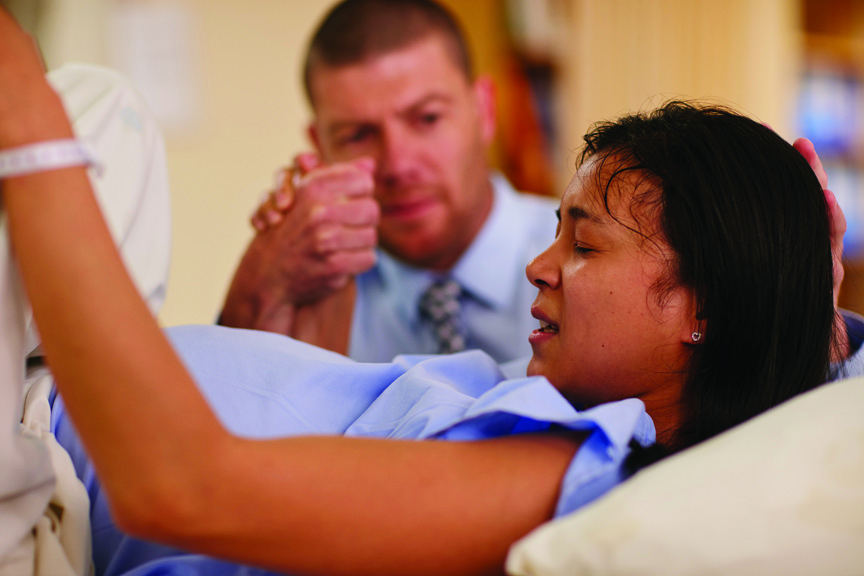
Some things to consider:
- Who do you want in the delivery room?
- Are there any special traditions you want to have when your baby is born?
- Do you want to hold your baby immediately after delivery or after your baby is cleaned off and swaddled?
- Do you want to move around during labor?
- Do you want your partner to film or take photos in the delivery room?
- Do you want to avoid using pain medication?
- Do you want to be offered pain medication as soon as possible?
- Who do you want to cut the umbilical cord?
- What kind of support do you want during labor, such as help with breathing, massage, etc.?
Think through the steps of labor and discuss the various options with the person who will be there to support you during labor and birth. Remember that while you may have a plan, it may be medically necessary for hospital staff to take certain actions.
Discuss your birth plan with your doctor in advance.
If you have questions about a birth plan, you can reach out to Healthy Mothers Healthy Babies Coalition of Palm Beach County at 561-623-2800.
For more information on pregnancy, sign up or log in to EveryParent below.
Counting your baby's kicks
You likely will first feel your baby start moving between Week 18 and Week 25. That initial sensation is known as quickening. You should feel movement especially when you are relaxed at night or after you have had a meal or something sweet to eat.

Here’s how you do it:
Once you reach your third trimester (Week 28), doctors recommend you start “counting kicks”— regularly monitoring your baby’s movement. Getting to know your baby’s movement patterns could help prevent stillbirth and identify potential problems.- Set aside time in the morning and time in the evening.
- Find a comfortable position. Some moms-to-be sit with their feet up while others lie on their left side for better circulation (and potentially a more active baby).
- Start counting movements. See how long it takes to count 10 movements.
- Usually, it will take less than 30 minutes to get to 10. It can sometimes be up to two hours, though.
- If you have not felt 10 movements in two hours, wait a few hours and try again, according to the American Pregnancy Association. If during the second attempt, you still do not feel 10 movements in two hours, contact your doctor.
- Kick count charts are available online. You also could download smartphone apps that help keep track. One such free app is Count the Kicks, which can be found at the Apple App Store and Google Play Store.
- Remember that all babies move differently. If you notice a significant change in how much your baby is moving, contact your doctor immediately.
SOURCE:
American Pregnancy Association
For more tips on pregnancy, sign up or log in to EveryParent below.
What is preeclampsia?
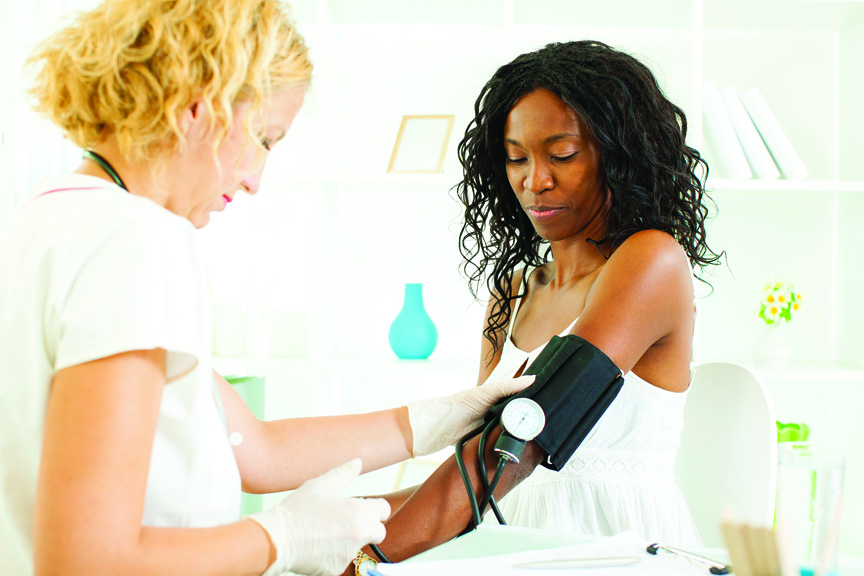
Preeclampsia is a disorder that can occur during pregnancy in which a woman’s blood pressure will go up dangerously high, putting her and her baby’s health at risk. A new mom also could develop the condition up to six weeks after giving birth. It could happen even if she had normal blood pressure readings throughout her pregnancy, the birth and her hospital stay.
What is especially important for women to know is that you can feel fine despite having elevated blood pressure. High blood pressure, also known as hypertension, is often called “a silent killer.”
WHAT ARE SOME OF THE RISK FACTORS FOR DEVELOPING PREECLAMPSIA?
- If you are Black. The preeclampsia rate is 50 percent higher for Black women than women overall.
- If you had preeclampsia during a previous pregnancy or have had family members who had it.
- If you have high blood pressure, diabetes, kidney disease or an autoimmune disease.
- If you are obese, meaning your body mass index (BMI) is more than 30.
- If this is your first pregnancy or you are pregnant with multiple children.
WHAT ARE EARLY SIGNS OF PREECLAMPSIA?
- Headaches that do not go away with over-the-counter Tylenol
- Stomach pains
- Shortness of breath
- Nausea
- Confusion
- Changes in vision
- Sudden weight gain
- Edema — the accumulation of excess fluid (swelling) around your face, your eyes or in your hands.
SOURCE:
March of Dimes
American Pregnancy Association
For more information about pregnancy, sign up or log in to EveryParent below.
See More Articles Like This!
The EveryParent app and website are free resources for Palm Beach County families.
For more helpful parenting info just for you, sign up for EveryParent today!